Blinds for Large Picture Windows: How to Keep the View and Cut the Glare
Large fixed windows facing a pool, lanai or lake are one of the best things about an Orlando home, until the afternoon sun hits them. Here are the choices you make standing at that glass: one shade or several, view-preserving fabrics, motorization, fade pro...

In this guide
You bought the house for the view. The big fixed window looks out over the pool, the screened lanai or the lake. Then your first Orlando summer shows you the downside: glare on the TV at 4 p.m., a hot living room and a rug that looks a shade lighter by fall. Choosing blinds for large picture windows comes down to one question. How do you tame the sun without covering up what you're looking at?
We're a family-owned Orlando company, and we measure windows like this almost every week. This guide walks through the decisions you'll face standing at that glass: one shade or several, which fabrics keep the view, when a motor makes sense, how to slow fading and how to tie the window in with the slider next to it. It doesn't give a catalog, size charts or prices, because every big window is different. Your options depend on your measurements, your wall and the direction the window faces.
The view is the point. The treatment should stay out of its way.
On a large window, the treatment becomes part of the wall. A slim roller or solar shade can disappear into the frame when it's raised and still soften the light when it's lowered. A busy treatment fights the view. When we design custom window blinds and shades for big glass, we try to show off the outdoors and hide the hardware.

Blinds for Large Picture Windows: One Wide Shade or Several Panels?
This is the first decision, and three things settle it. The first is width. Every shade fabric and headrail has a maximum width it can be made in and still roll, lift and hang straight. The second is weight. A very wide shade is heavy to raise by hand, which leads straight to motorization. The third is the window itself. If mullions or a wide frame divide the glass, it usually makes sense to split the shades at those lines so the breaks look planned instead of accidental.
What should you ask about size? Ask for the maximum width and height of the exact fabric and system you like. Ask whether wide shades in that fabric need a seam or railroaded fabric, where the material is turned sideways to cover the width. Ask whether the motor or lift system is rated for the finished weight. These limits change from product to product, so we don't list numbers here. Check each one against your own measurements. A good designer does this at your window, not from a brochure.
What to confirm before choosing a shade for big glass
Which Options Keep the View While Cutting Heat and Glare?
For pool and lake views, you usually want a shade you can still see through while it's down. Strictly speaking, the best blinds for large picture windows are usually shades, and these four do the job best:
- Solar roller shades. The go-to choice for big glass. The woven screen fabric cuts glare and some heat and keeps the outline of the view. A darker fabric usually gives a clearer view out than a light one. A tighter weave blocks more sun but shows less of the view.
- Sheer shades. Soft fabric vanes float between two sheer layers. Tilt them open to see out through a gentle haze, or close them for privacy. They suit a living room well.
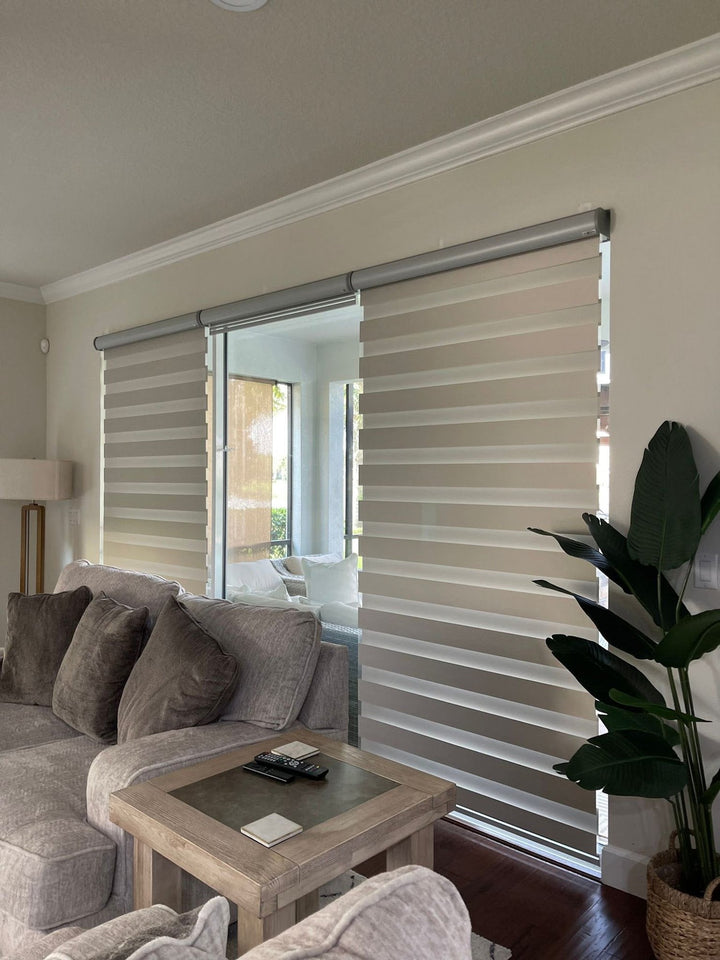
- Zebra shades. Alternating sheer and solid bands let you move between a filtered view and more privacy without raising the shade. Read our zebra blinds pros and cons before you choose.
- Cellular shades. They don't keep the view, but the honeycomb cells insulate well. Consider them for a west-facing window you mostly cover in the afternoon, or layered behind a solar shade.

Soft light, still a view
On very wide glass, a vertical sheer or dream shade can run the full width and stack neatly to one side. For more on how fabrics hold up in our climate, see the best window treatments for Orlando sun and heat and the best blinds for Orlando's humidity.
Which way the window faces matters as much as the fabric. East-facing glass gets bright morning sun that fades by midday. West-facing glass takes the hot, low afternoon sun that causes most TV glare and heat. North light is soft and steady, so a lighter, more open fabric is often enough. If you're covering several large windows on different sides of the house, it's fine to use different openness levels from the same fabric family. They'll look matched and still handle each window's sun.
When Does Motorization Become Almost Required?
On a normal bedroom window, a motor is a nice extra. On a large picture window it's often the practical choice. These are the cases where we usually recommend it:
Signs your picture window needs a motor
A motor also keeps a row of panels perfectly level when they move together, which matters on a long wall of glass. For a fuller look at the trade-offs, read are motorized blinds worth it. If you skip the motor, choose a cordless lift system. It's the safer choice for children and pets, and it looks cleaner on big glass.

How Do You Protect Floors and Furniture From Fading?
Fading is the slow damage big windows do. Ultraviolet light and strong sunlight break down the dyes in rugs, upholstery, artwork and wood floors. A large pane facing west or south over open water or a pool deck lets in a lot of it, and the water reflects even more light into the room.
“The shade you lower at 2 p.m. matters more than the one you love in the showroom. Fade protection only works when the shade is actually down.”
- Choose a solar fabric with a tighter weave for the sunniest windows. It blocks more UV but shows a little less of the view.
- Set schedules on motorized shades so they come down during peak sun hours for that side of the house.
- Layer it. A solar shade for daytime plus drapes or a blackout layer for evenings gives you more control.
- Move or rotate rugs and furniture that sit right in the light path. No window treatment blocks sunlight while it's open.
Matching the Picture Window With Nearby Sliders and Doors
In many Orlando homes, the picture window sits right next to a sliding glass door to the lanai. If each opening gets a different treatment, the wall looks pieced together. You want all the glass to read as one surface.
Same fabric, same line, different hardware
Sliders need a treatment that clears the door path. Panel track shades and vertical sheers work well because they stack to the side. The fixed window beside them can take a roller or solar shade in the same fabric and color. Line up the tops of the headrails and the bottom hems so everything sits on one line. For a wider look at styles, see our buyer's guide to shutters, blinds and shades.

A few other ways to tie the wall together: use matching fascias or cassette valances across every opening, pick one fabric family in different openness levels, or put the window and door on the same motor group so they move together. Drapes that run the full wall on a single rod or ceiling track can also frame the whole thing as one feature.
How to Measure a Large Picture Window
We always take the final measurements at your in-home visit. Measuring yourself first still shows you which options are realistic. Large windows are rarely perfectly square, so take your time and use a steel tape.
How to measure a large picture window for shades
- Choose inside mount (inside the window frame, for a clean built-in look) or outside mount (on the wall or trim above, which covers more glass and reduces light gaps).
- For inside mount, measure the width at the top, middle and bottom of the opening and write down the smallest number.
- For inside mount, measure the height at the left, center and right, and write down the longest number.
- Check the window depth to confirm the headrail or cassette fits inside the frame.
- For outside mount, measure the area you want covered and add overlap on each side to reduce light gaps.
- Note any mullions, cranks, alarm sensors or nearby doors that could affect where panels split.
- Measure twice. Then compare your numbers with the maximum size of each product you're considering.
Once your design is final, installation is quick. Most homes are installed in a single day, including picture windows, sliders and any motor programming, so you'll see the full wall finished at once.
Shades that work well on large picture windows
- The best blinds for large picture windows control glare and heat and keep the view. That usually means solar roller, sheer or zebra shades.
- Choose one wide shade or several panels based on width, weight, mullions and how the sun moves across the glass.
- Size limits depend on the product, so check each one against your own measurements.
- Match fabric openness to the direction the window faces. West glass needs the most sun control.
- Motorization is the practical choice for wide, heavy or hard-to-reach shades, and cordless operation is the CPSC-recommended choice for child safety.
- Shades only reduce fading while they're down at peak sun, so use schedules, layering and tighter weaves.
- Use the same fabric and line up headrails and hems so the window and nearby sliders look like one piece.
Made to measure
Explore the styles
- ShadesRoller ShadesClean, simple shades in light-filtering, room-darkening or blackout fabrics.View details
- ShadesZebra ShadesAlternating sheer and solid bands you line up to adjust light and privacy.View details
- ShadesRoman ShadesFabric shades that fold into soft layers as they rise.View details
- ShadesSheer ShadesSoft fabric vanes between two sheer layers that tilt for view or privacy.View details