Can Blinds Be Repaired, or Is It Time to Replace Them?
Twist wand spinning freely? Vertical slats falling off the track? Here is an honest look at which blind parts you can replace, how Florida sun and humidity wear them out, and when replacing the blind makes more sense.

In this guide
Can Blinds Be Repaired? The Short Answer
If you bought a resale home in the Orlando area, you probably inherited its blinds too: vertical blinds on the slider, wood or vinyl blinds in the bedrooms, and a few that don't work anymore. So, can blinds be repaired? Often, yes. Wands, tilters, cords, connectors and single slats are small parts, and many of them can be swapped out. But some failures mean the blind is done, and the Florida climate tends to hit every blind in a house at about the same time. As a local family company that designs and installs window treatments, here is our honest take on when to fix and when to replace.
First, think about the cords
Before you restring an old corded blind, think about who lives in the house. The U.S. Consumer Product Safety Commission (CPSC) warns that window covering cords can strangle young children, and it recommends cordless products in homes with kids or pets. If a lift cord has snapped, that can be a good time to switch to cordless window treatments instead of putting a new cord back in.

The Parts That Break, and Which Ones You Can Replace
Homeowners rarely know the proper name for the part that broke. They say "the stick won't turn the slats," or "the little clips at the top keep letting go." Here are those parts by name, so you can search for them or describe them at a hardware store.
Vertical blinds
- The wand that spins but does nothing: the tilt wand or its hook has come loose from the gear in the headrail. A new wand is often a simple swap if you can match the connection.
- The clips at the top of each slat: these are carriers and stems. When one cracks, that slat drops to the floor. Single carriers can usually be replaced, but if several are going, the rest are not far behind.
- The chain along the bottom: the spacer chain keeps the vanes evenly spaced. It snaps easily and can be replaced.
- The cord that won't pull the blind open: the traverse cord may be frayed or off its pulley. It can be restrung, but it is fiddly work inside the headrail.
- Cracked or curled slats (vanes): a single vane can be swapped if you can find a match in size, color and shape.
Wood and vinyl horizontal blinds
- The twist rod or operating bar: the tilt wand clips onto a small hook on the tilter. Broken wands are among the easiest fixes.
- The gear box that grinds or slips: the tilter sits inside the headrail. When its plastic gears strip, the slats won't tilt. Some tilters can be replaced if you can match one.
- The blind that won't stay up: a worn cord lock lets the lift cords slip. It is replaceable, but it is a sign of overall wear.
- Frayed lift cords and ladder strings: the strings that hold each slat can be restrung, but it means taking the whole blind apart.
- Cord joiners and connectors: the little plastic pieces that join cords or link a wand to its hook break with age and are sold as small parts.
Signs it's time to replace, not repair
How Florida Sun and Humidity Wear Out Blind Parts
Most small blind parts are plastic, and Central Florida is hard on plastic. Strong UV through west- and south-facing glass makes carriers, stems, wand hooks and tilter gears brittle over the years, so they crack when you turn them. Vinyl slats can yellow, sag or curl in the heat that builds up between the blind and the glass. The headrail sits right at the top of the window, where it gets hottest.
Humidity brings a second set of problems. Real wood slats can swell and warp in a damp room, and bathrooms and kitchens can grow mildew on fabric tapes and cords. Metal springs and pulleys inside a headrail can corrode. We cover which materials hold up best in our guide to the best blinds for Orlando's humidity.
“When one plastic part breaks after years in Florida sun, the parts around it have usually had the same years. A repair can buy you time, but rarely a fresh start.”
When a Repair Costs More Than It's Worth
The part is rarely the hard part. The real cost of a repair is the hunt for a matching part, the shipping, your Saturday, and the chance it doesn't fit once it arrives. That trade is worth it for one broken wand on an otherwise healthy blind. It is not worth it when the whole house of blinds is the same age and starting to fail.
How to Find the Brand or the Exact Part Before Ordering
Blind parts are not universal. A wand hook, carrier or tilter from one maker may not fit another's headrail, so work out exactly what you have before you order anything.
How to identify a blind part
- Take the blind down if you can, or remove the valance so the whole headrail is visible.
- Look for a sticker or stamp on the headrail, under the end caps, or on the bottom rail. Many blinds carry a label with a maker name or order number.
- Photograph the broken part next to a tape measure, from the front, the side and the end.
- Measure the headrail width, the height and depth of the headrail, and the slat width. Measure twice and write it down.
- Note how the part connects: the shape of the wand hook, the type of stem on a vertical carrier, and the diameter of the tilt rod.
- Bring the photos and the old part when you shop, or send them with your question to a parts supplier, before you buy.
If there is no label and the part doesn't match anything you can find, you have your answer: that blind is probably near the end of its life.
Sliding Doors and Big Windows: What to Consider

Rethinking the sliding door
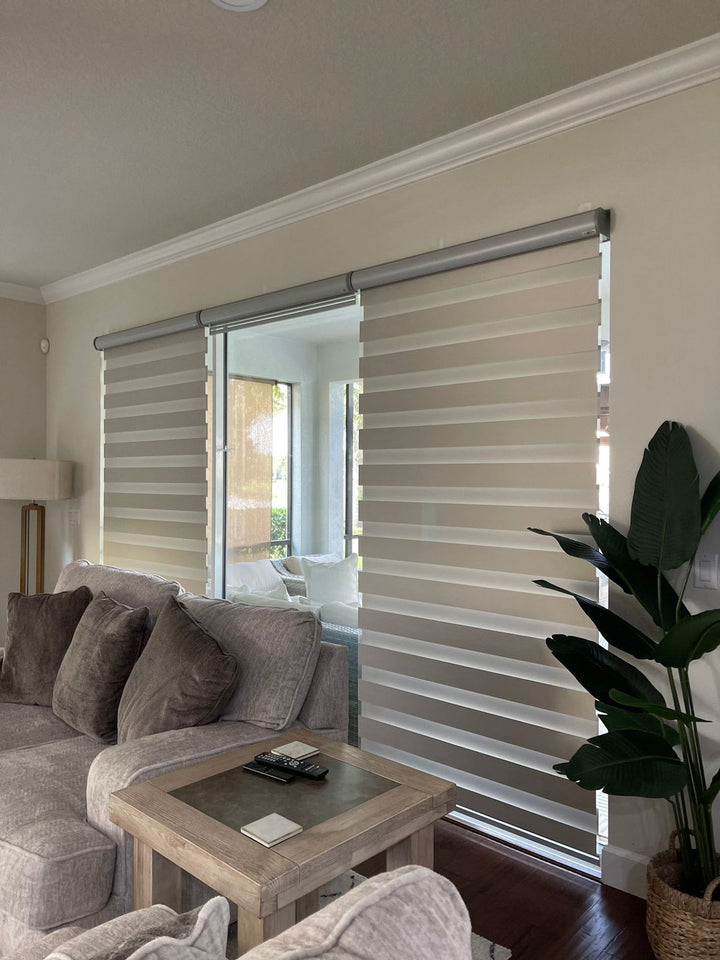
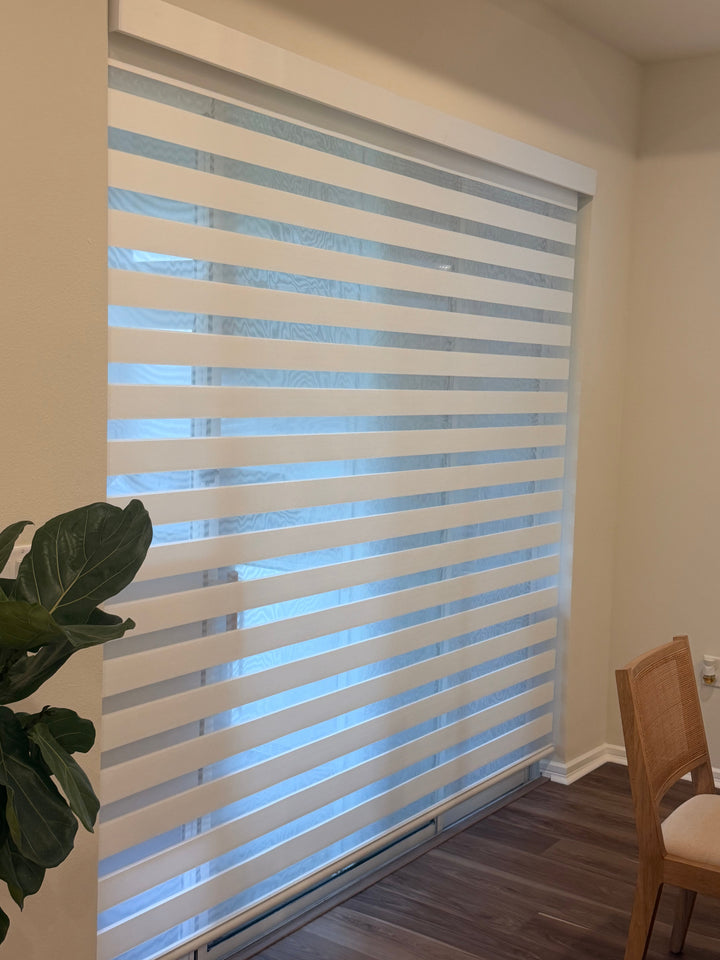
Vertical blinds on a slider take more wear than any other blind in the house. They get opened every day, brushed by pets and hit by the full afternoon sun. If yours are losing carriers and vanes, think about a covering made for wide openings. Panel track shades, sheer shades and zebra shades slide or lift without a row of small plastic carriers to crack. For huge glass, our guide to blinds for large picture windows explains how to keep the view and cut the glare.
For big windows, ask about solar roller shades to cut heat and glare, and about motorization where a window is very wide or hard to reach. We weigh that option in are motorized blinds worth it. Whether a new shade goes inside the frame (inside mount) or over it (outside mount) changes how much light leaks in and how the door clears, so it is measured at the in-home visit. Most homes are installed in a single day.
Options for sliding doors and large windows
- Can blinds be repaired? Often, yes. Wands, connectors, spacer chains, cord locks and single slats are replaceable parts.
- A bent headrail, several failing parts or faded, warped slats usually mean it is time to replace.
- Florida UV makes plastic parts brittle, and humidity warps wood and corrodes metal parts, so blinds of the same age tend to fail together.
- Identify the part first: look for labels, photograph it, and measure twice before ordering.
- For corded blinds in homes with children, the CPSC recommends going cordless rather than restringing.
- Sliding doors and big windows often do better with panel track, sheer, zebra or solar roller shades.
Made to measure
Explore the styles
- ShadesRoller ShadesClean, simple shades in light-filtering, room-darkening or blackout fabrics.View details
- ShadesZebra ShadesAlternating sheer and solid bands you line up to adjust light and privacy.View details
- ShadesRoman ShadesFabric shades that fold into soft layers as they rise.View details
- ShadesSheer ShadesSoft fabric vanes between two sheer layers that tilt for view or privacy.View details